Can AI Replace Human Jobs in the Future?
Artificial Intelligence (AI) has become one of the most talked-about technologies in the world. From virtual assistants like Siri and Alexa to advanced tools such as ChatGPT and self-driving cars, AI is transforming the way we live and work. As AI continues to evolve, a common question arises: Can AI replace human jobs in the future?The answer is not as simple as yes or no. While AI has the potential to automate many tasks currently performed by humans, it is also creating new opportunities and industries. Understanding the impact of AI on employment is crucial for workers, businesses, and students preparing for the future.
What Is Artificial Intelligence?
Artificial Intelligence refers to computer systems designed to perform tasks that normally require human intelligence. These tasks include learning, problem-solving, decision-making, language understanding, and pattern recognition.Modern AI systems can analyze large amounts of data, identify trends, and make predictions faster than humans. This capability allows businesses to improve efficiency, reduce costs, and increase productivity.
Why Are People Worried About AI Replacing Jobs?
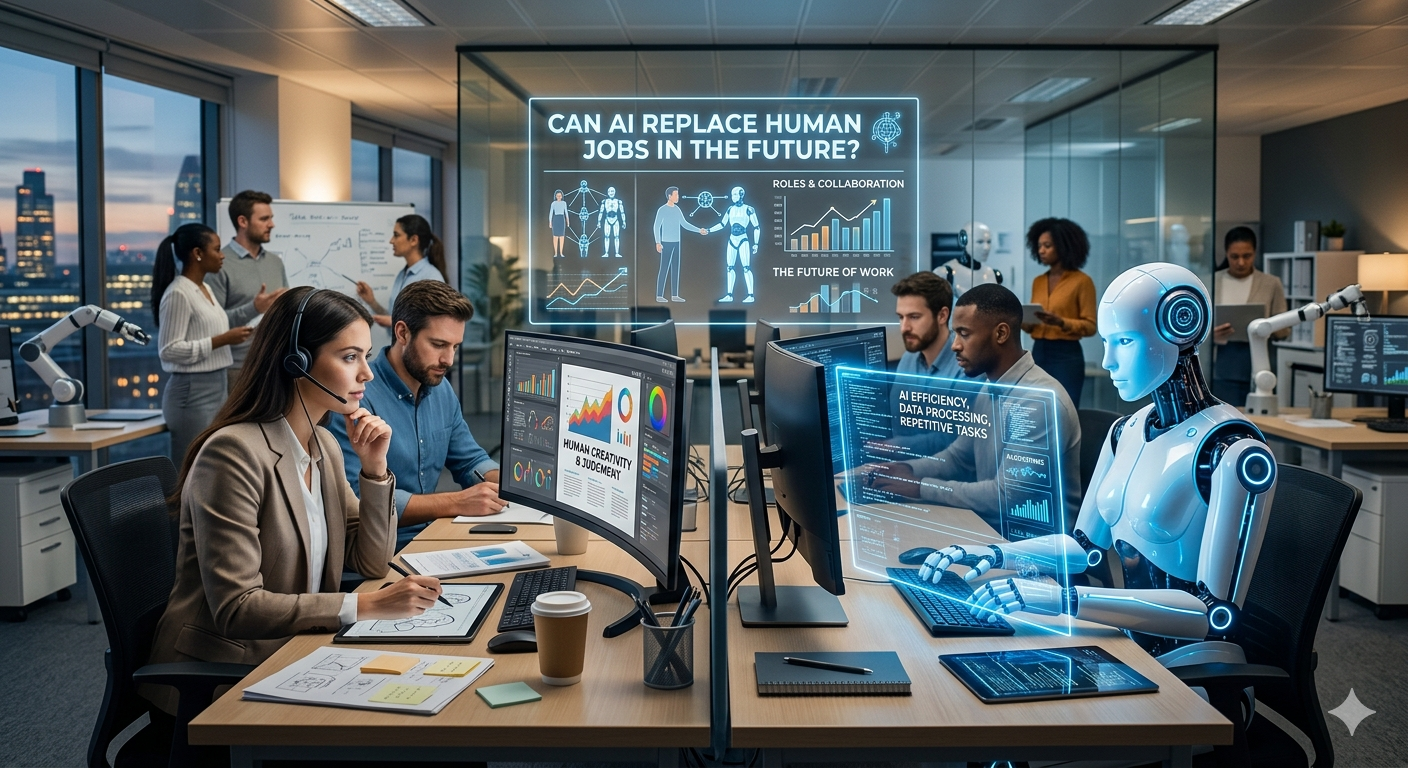
Many people fear that AI will take over jobs because machines can often work faster, longer, and more accurately than humans. Businesses are increasingly adopting AI-powered tools to automate repetitive tasks, reducing the need for manual labor.For example:Customer service chatbots can answer common questions 24/7.Manufacturing robots can assemble products with high precision.AI software can analyze financial data in seconds.Automated systems can manage inventory and logistics.As these technologies become more advanced, some traditional jobs may become less necessary.