
How Does Climate Change Affect Our Daily Lives?
Climate change is one of the biggest challenges facing the world today. It refers to long-term changes in global temperatures and weather patterns, mainly caused by human activities such as burning fossil fuels, deforestation, and industrial pollution. While climate change may seem like a distant environmental issue, it actually affects our daily lives in many ways.
Rising Temperatures
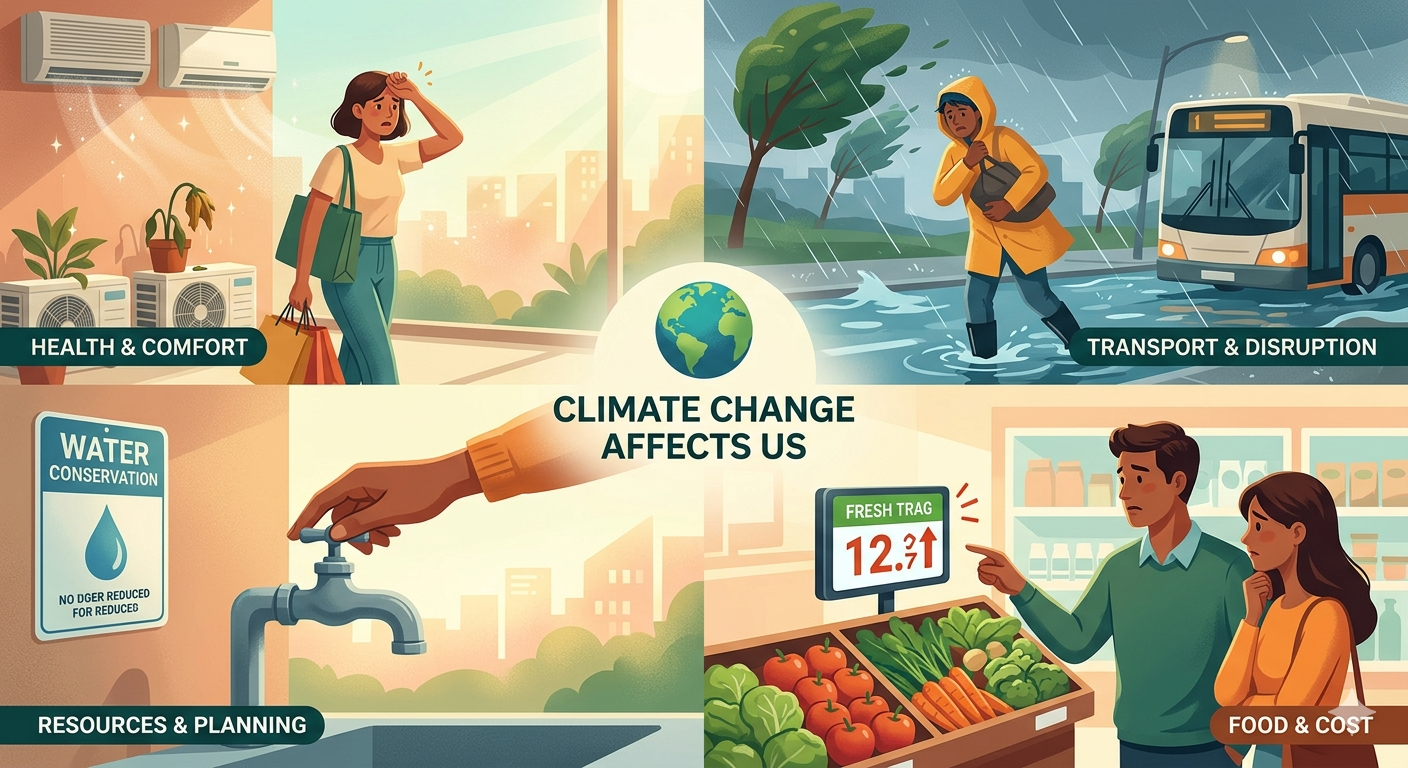
One of the most noticeable effects of climate change is the increase in global temperatures. Summers are becoming hotter, and heatwaves are occurring more frequently. Extreme heat can make outdoor activities uncomfortable and even dangerous, especially for children, older adults, and people with health conditions. Higher temperatures also increase the use of air conditioners, leading to higher electricity bills
Changes in Weather Patterns
Climate change is causing weather patterns to become more unpredictable. Many regions experience heavier rainfall, stronger storms, floods, and droughts. These extreme weather events can damage homes, roads, and public infrastructure. They may also disrupt transportation, school schedules, and daily routines.
Impact on Food Prices
Climate change affects agriculture by altering rainfall patterns and increasing the frequency of droughts and floods. Farmers may face difficulties growing crops, leading to reduced harvests. As food production becomes more challenging, the prices of fruits, vegetables, and other essential foods can increase, affecting household budgets.
Health Risks
Climate change can have a direct impact on human health. Hotter temperatures increase the risk of heat-related illnesses such as dehydration and heatstroke. Poor air quality caused by pollution and wildfires can worsen respiratory conditions like asthma. Additionally, changing climates can allow certain diseases and insects to spread into new areas.
Water Shortages
Many parts of the world are experiencing water scarcity due to climate change. Reduced rainfall and prolonged droughts can decrease water supplies for drinking, farming, and daily use. Water shortages may lead to restrictions and make it more difficult for communities to meet their needs.
Effects on Nature and Wildlife
Climate change affects ecosystems, animals, and plant life. Rising temperatures and habitat destruction threaten many species. Coral reefs, forests, and other natural environments are facing increasing pressure. Since humans depend on healthy ecosystems for food, clean air, and water, these environmental changes can also impact our quality of life.
Economic Consequences
Natural disasters caused by climate change often result in significant financial losses. Governments and businesses must spend billions on recovery efforts, repairs, and rebuilding projects. These costs can indirectly affect citizens through higher taxes, insurance premiums, and product prices.
What Can We Do?
Although climate change is a global issue, individuals can make a difference by adopting environmentally friendly habits. Simple actions such as saving energy, using public transportation, reducing waste, recycling, and planting trees can help reduce carbon emissions. Supporting renewable energy sources and sustainable products can also contribute to a healthier planet.
Conclusion
Climate change is not just an environmental problem—it affects our daily lives in many ways. From rising temperatures and extreme weather to higher food prices and health risks, its impact is becoming increasingly visible. By understanding these effects and taking small but meaningful actions, we can help protect our environment and create a more sustainable future for generations to come.